
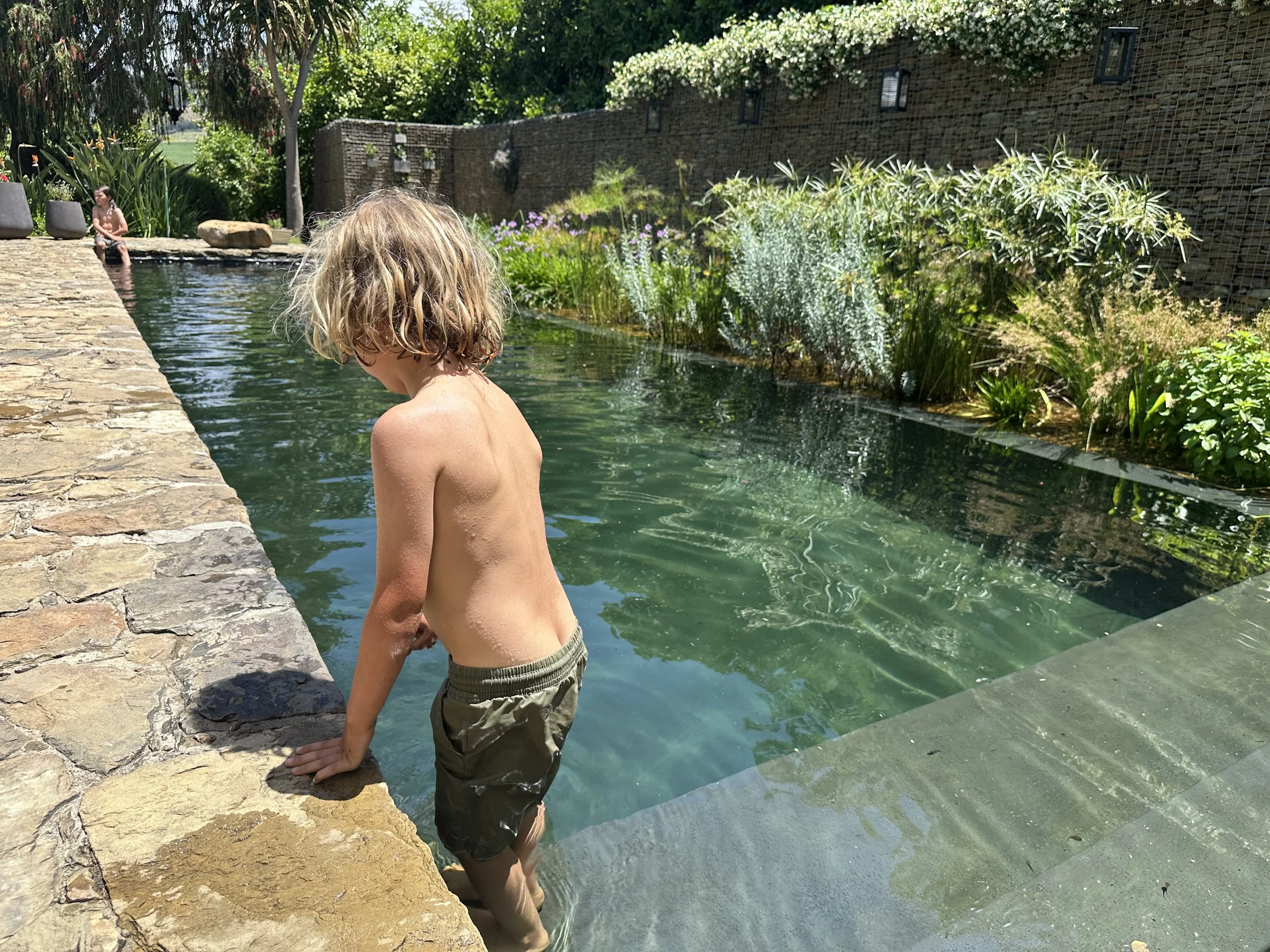
Swimming.
As Nature Intended.
NATURAL POOLS CAPE TOWN
Experience the luxury of pure, crystal-clear water, naturally filtered without chlorine or synthetic chemicals.
Natural swimming pools were originally filtered using large planted wetlands that relied entirely on natural biological processes to clean the water.
Today, those same processes can be carefully engineered and concentrated into highly efficient filtration systems.
By concentrating and amplifying the natural purification processes found in wetlands, our engineered filtration systems deliver levels of water clarity and stability that traditional wetland-only systems struggle to achieve.
Beyond Chlorine. Beyond Large Gravel Wetlands.
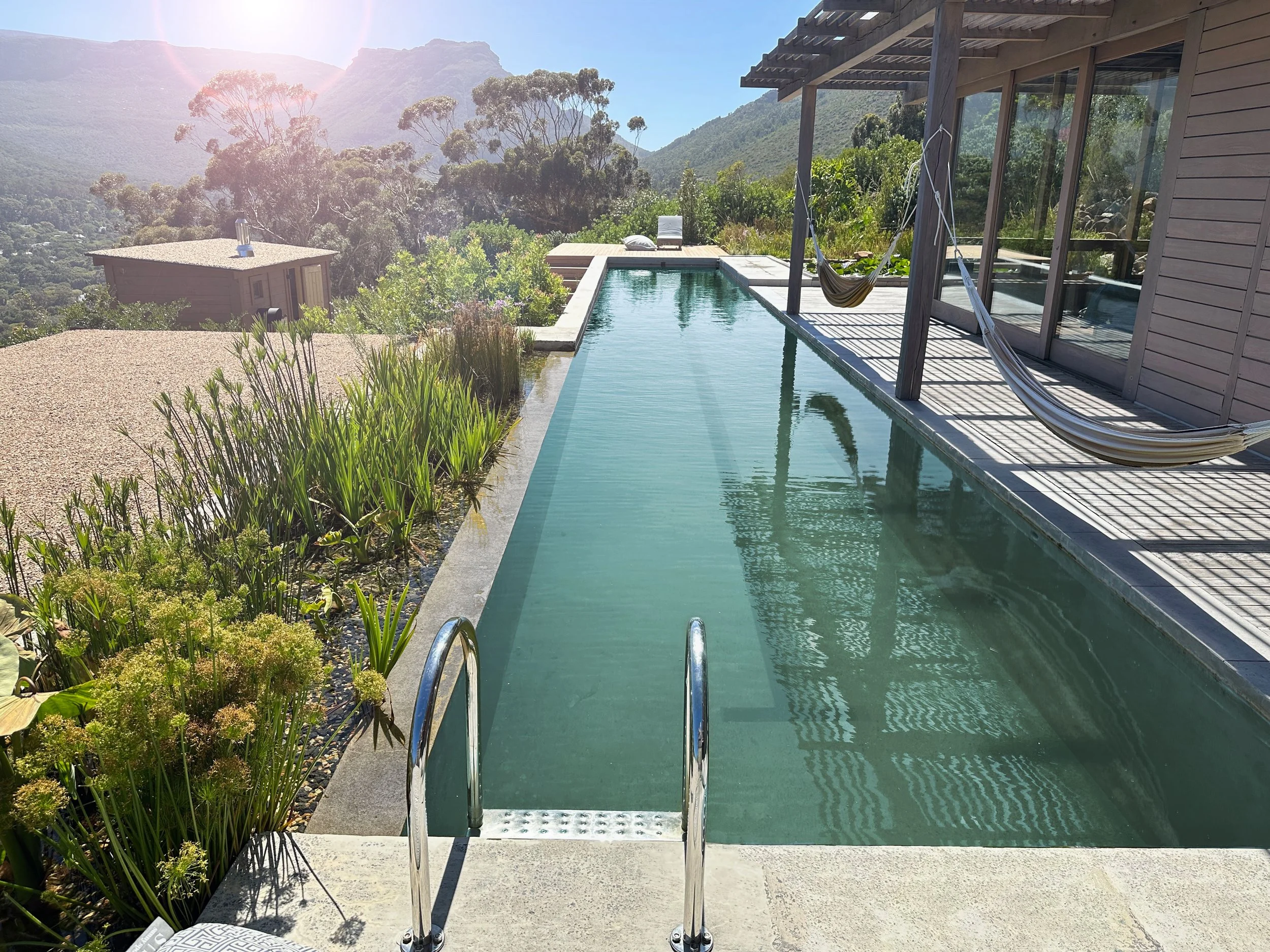
We call it EcoFusion.
Natural water. Modern engineering.
In nature, wetlands clean water using plants, microbes, and flow through mineral surfaces. Traditional natural pools mimic that with large gravel beds.
EcoFusion takes the same biological idea one step further: it amplifies and concentrates those processes into a compact, serviceable filtration core designed, installed, and commissioned as one system.
The result is better clarity, far less maintenance and design flexibility.
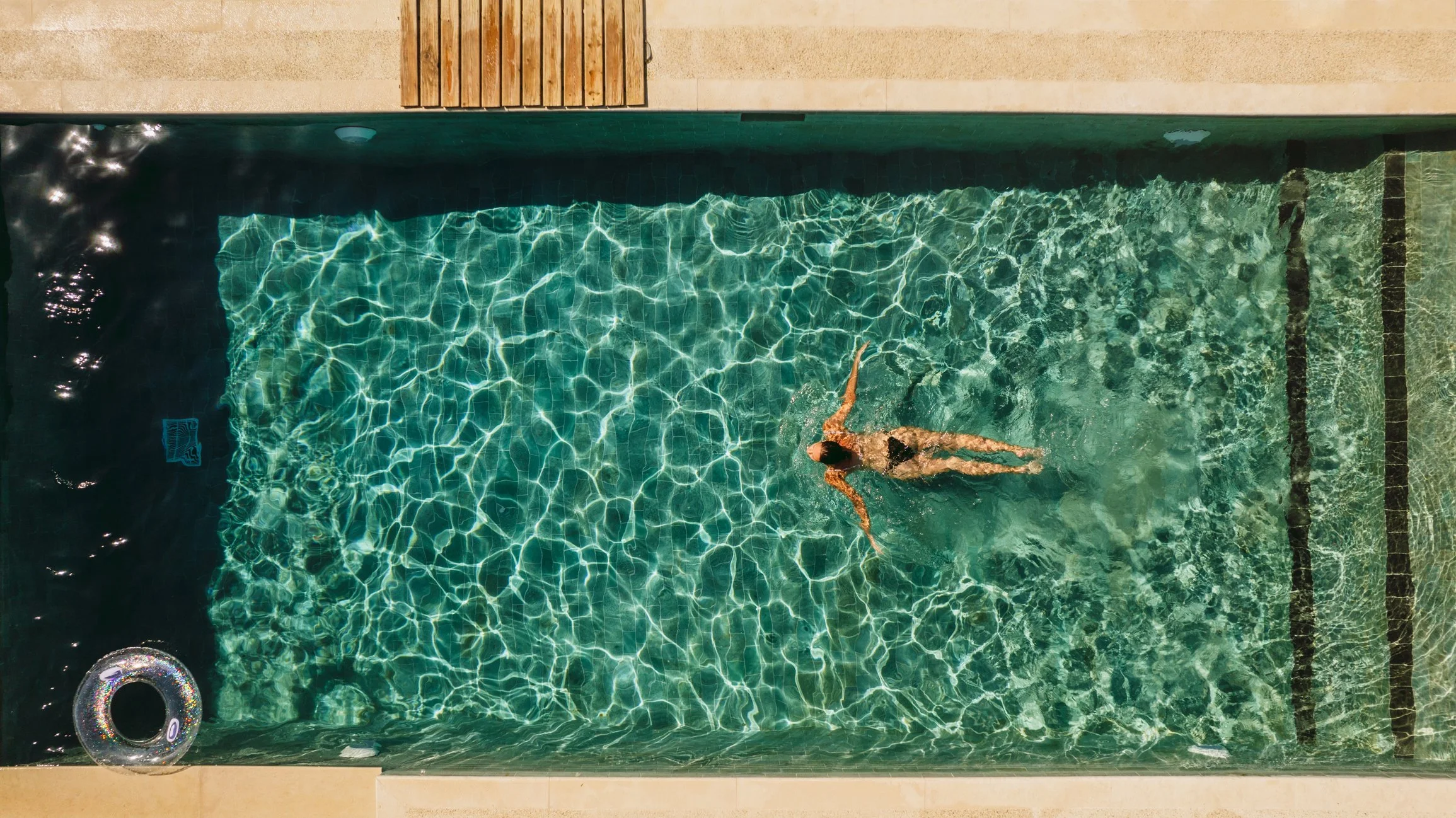
Feels better
100% Chemical-free freshwater that’s gentle on skin and hair
Stays clear
Engineered stability and predictability under real-world use
More design freedom
Plants and habitat if you want them; not forced into old wetland ratios or large footprints
Takes 5–10 minutes. No spam. Clear answer.
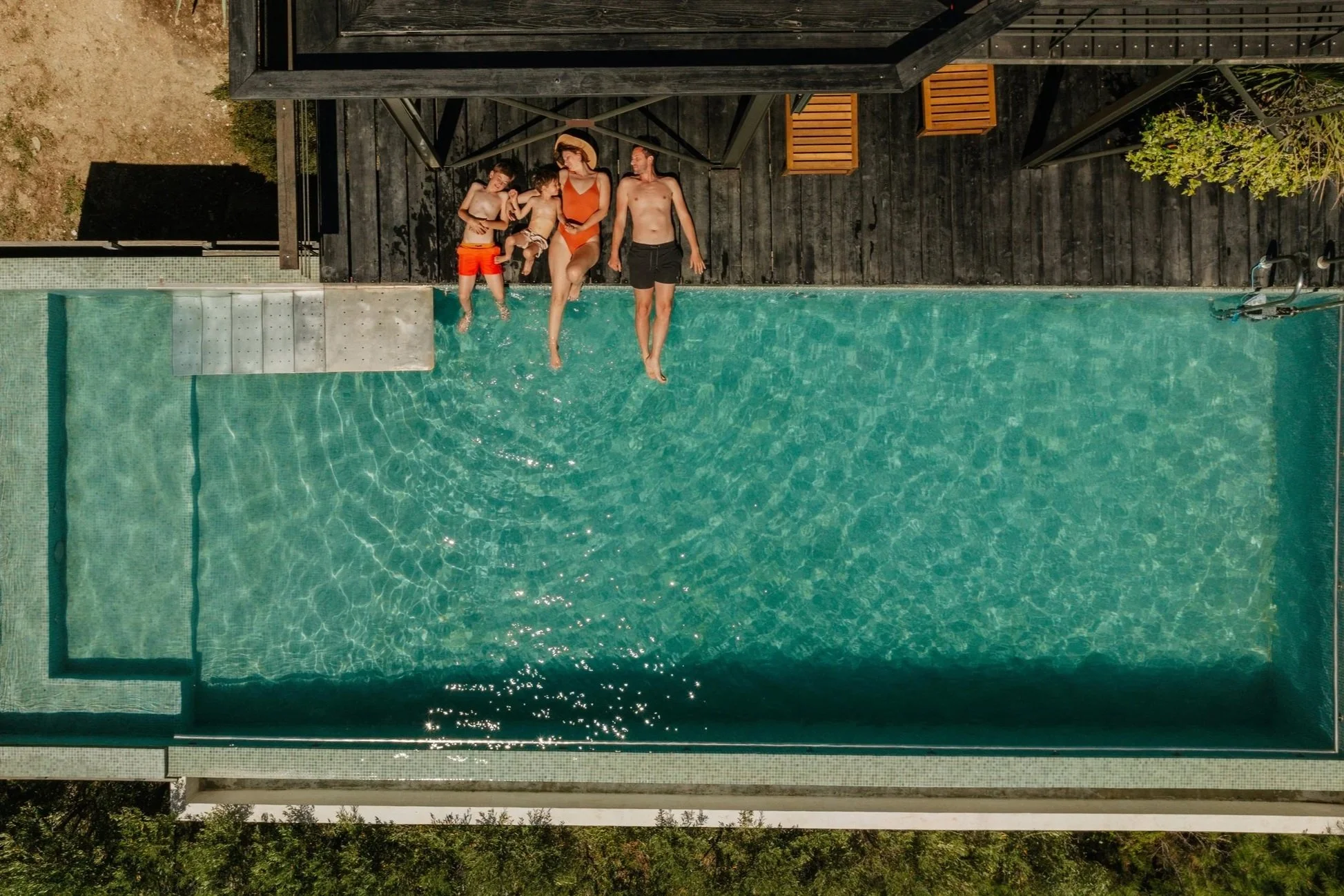
Choose the look you want.
The water stays clean either way.
BioPool (plant-free)
Clean architectural water with invisible natural filtration.
A modern natural swimming pool without visible plants. Water is filtered using engineered biological systems to maintain clarity while keeping the aesthetic sleek and minimal.
Chemical-free pool without a wetland
EcoFusion filtration keeps the water clean and clear
Ideal when space is tight or you want maximum swim area
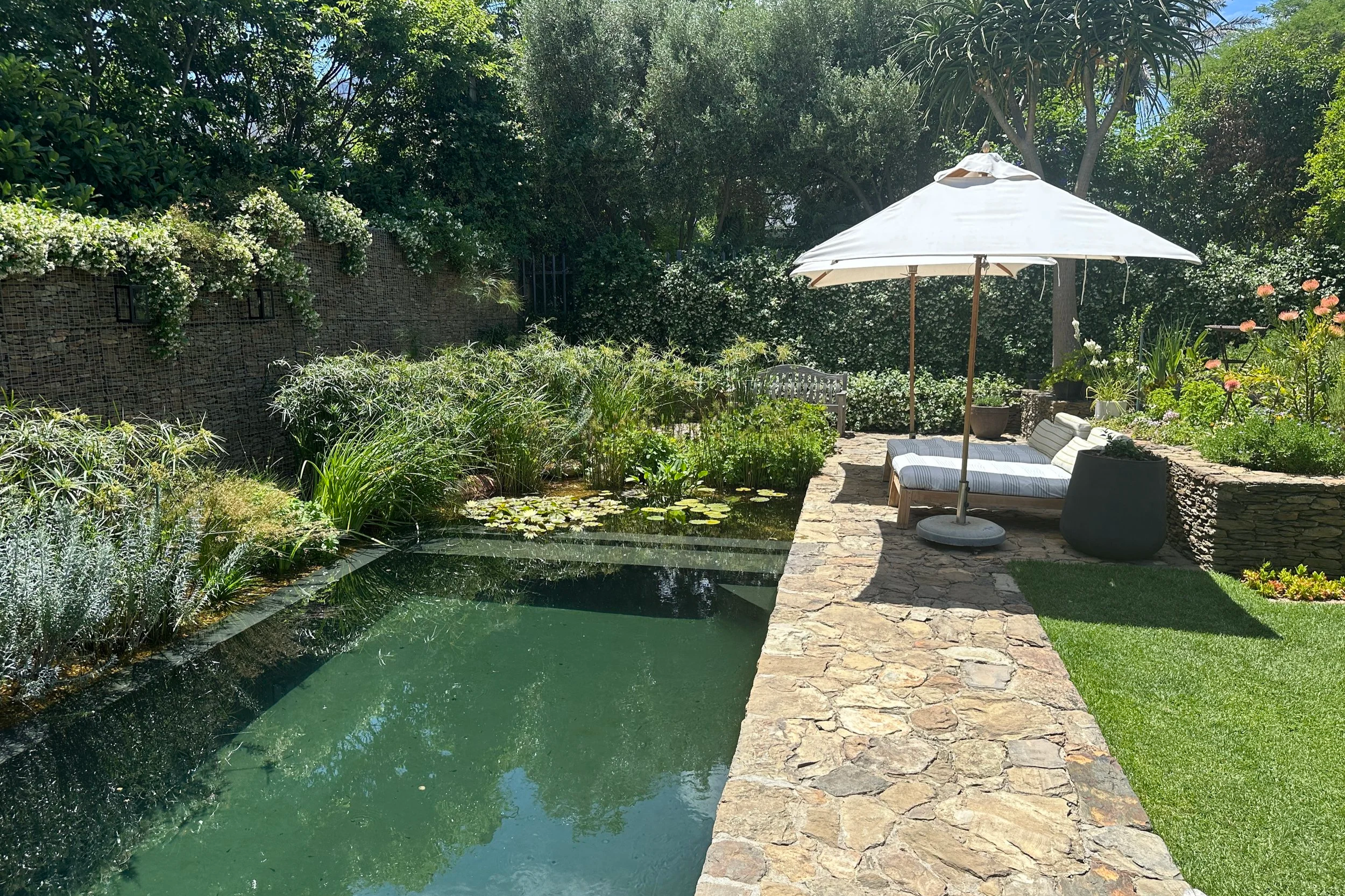
Natural Pool (with plants)
A living ecosystem designed to blend swimming with nature.
A natural swimming environment that incorporates aquatic plants and wetlands, creating a beautiful, biodiverse landscape around the water.
EcoFusion + planted zones for beauty and habitat
Plants included because you want them
Wetland areas integrated creatively, not forced by old ratios
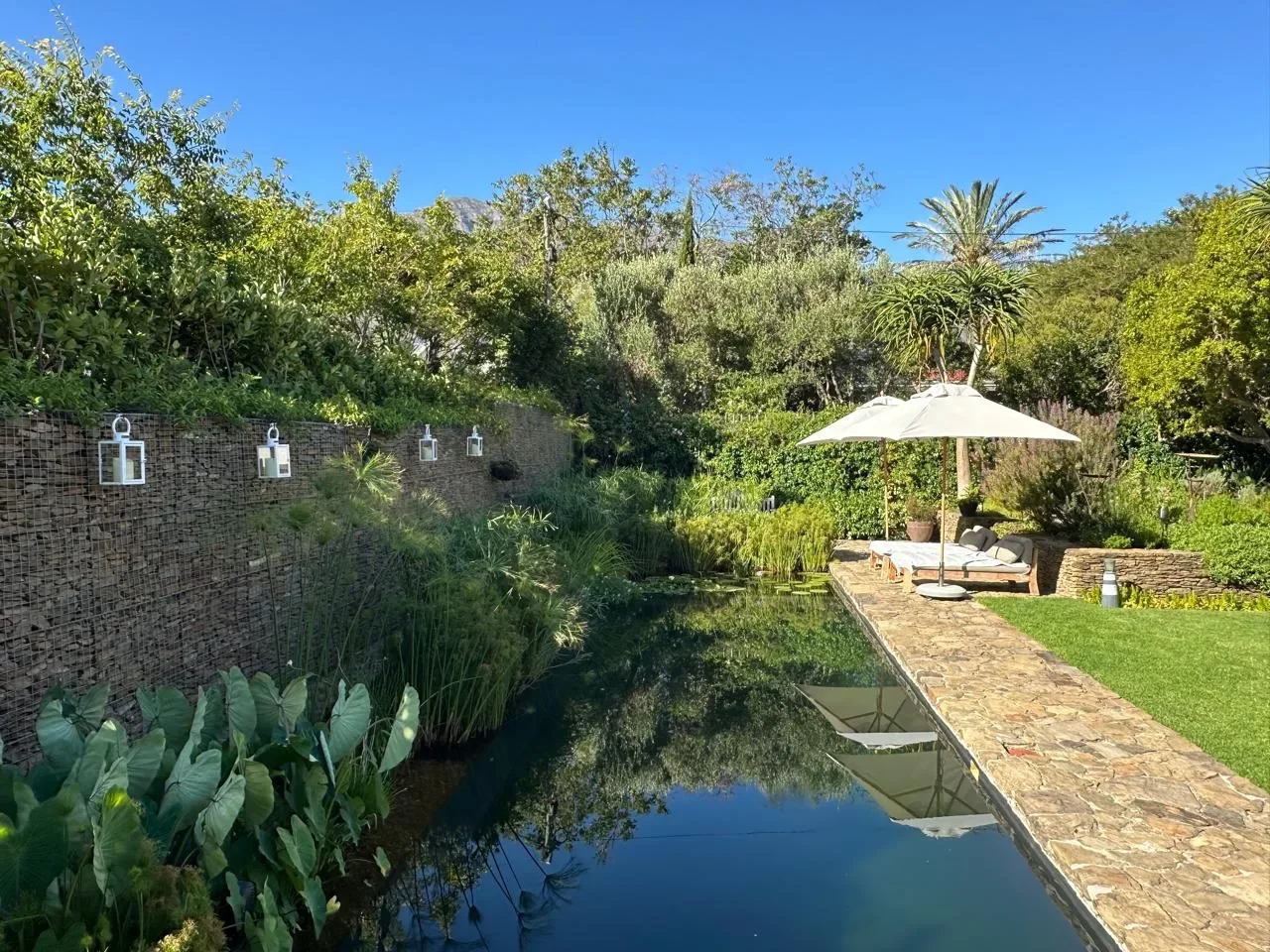
“We've worked with Andy from Leaf & Stone for many years now and have been SOOO happy with the wonderful natural pool and serene eco-space he's created in our garden ... it also works well as a swimming pool too
And every spring, he checks in and we make a plan to feed the plants and keep enhancing this beautiful space.
Highly recommended, thoroughly professional and an all round nice guy!”
— Tony Fishlock
Interested in a Conversion?
Start with a free remote assessment
Send a few photos, a quick video, and your pool dimensions. We’ll come back to you with a clear recommendation, a rough cost range, and what the next step should be. If it looks like a strong fit, the next step is a site visit to confirm technical details.
Takes 5–10 minutes. No spam. Clear answer.
What People Are Saying
“We couldn’t be happier with our natural pool from Leaf & Stone. What has impressed us most is the EcoFusion system. We were initially concerned that a natural pool might require a lot of maintenance, but the reality has been the exact opposite. The pool is remarkably easy to look after, the water stays crystal clear, and the system does an incredible job of keeping everything balanced naturally.”
— Ruth Scott
“A big thank you to Andy and his awesome team for crafting this wonderful nature pool in the front of my house Palm Rock in Simon‘s Town. Working with Leaf&Stone was easy, and straightforward, and after a year the pool adds an amazing feature to the architecture of the house. Regularly I now see Cape wagtails taking a baths in the shallows, and dragonflies buzzing over the surface. The pool created a new ecosystem and its amazing to watch how it grows and develops.”
— Gunnar Oberhösel
“I couldn’t recommend Andy and his team enough. I have been so happy with my 2022 retro natural eco pool- still going strong with water lilies and lots of other stuff that I have no clue what they are called - tall reeds, flora that the birds love and frogs/ toads.
I hope you convert your pool or start from scratch and create a natural filtration system that I know Andy will invent with you! Go for it! Natural is king!.”
— Former Customer
Frequently Asked Questions
-
Yes. When properly designed and maintained, natural swimming pools provide safe water for swimming.
Instead of sterilising water with chemicals such as chlorine, natural pools maintain water quality by removing the nutrients that allow harmful organisms to multiply. This is the same principle that keeps many lakes, mountain streams, and other natural freshwater systems clean.
In a well-balanced aquatic ecosystem, beneficial microbes break down organic matter and prevent conditions that allow harmful pathogens to thrive. Combined with good circulation and filtration, this creates water that is biologically balanced and safe for swimming.
Freshwater bathing standards around the world recognise that water does not need to be sterile to be safe. The key is maintaining a stable ecological balance where harmful organisms cannot dominate.
-
A natural swimming pool uses biological filtration instead of chemical disinfectants to maintain clean, balanced water.
In nature, water is purified by microorganisms, plants, minerals, and natural circulation. A natural pool recreates and enhances these processes within a carefully engineered system.
Water is continuously circulated through specialised biological filters where beneficial microbes remove nutrients and organic matter that would otherwise feed algae or harmful bacteria. Minerals and biological activity help maintain balanced water conditions.
The result is fresh, living water that remains clear without chlorine or harsh synthetic chemicals.
-
No. Many of the same maintenance tasks associated with a conventional chlorine pool still apply, such as backwashing filters every two weeks and using a pool robot to collect debris from the bottom of the pool, or manually vacuuming the pool once a week.
That said, we pride ourselves on the fact that our system is far more effective than many traditional natural pools that rely mainly on planted wetlands with slow water movement and less engineered circulation. Our approach uses a carefully designed hydraulic system, with highly efficient pumps that run at exceptionally low power and slow speeds for around 90% of the time, then automatically ramp up to much higher speeds in short bursts. These boost cycles are designed to push the vast majority of debris in the swimming area toward floor drains and skimmers.
A great deal of thought has gone into the details of keeping the swimming zone clean. Our system is exceptionally effective at keeping the water column clear and the pool free of suspended debris while still preserving the feel and benefits of natural water. Where natural water differs from a chlorine pool is on the submerged surfaces: these will naturally and inevitably develop a light, slimy biofilm over time, and this needs to be brushed off roughly once a week.
-
Natural pools typically have a higher upfront cost than basic chlorine pools but lower long-term operating costs.
Conventional pools require continuous purchases of chlorine and other chemicals to suppress algae and bacteria. Over time, nutrients accumulate in the water, which can make maintaining balance increasingly difficult and expensive.
Natural pools approach water quality differently by removing nutrients and supporting stable biological filtration. This creates a long-term solution that is more sustainable and typically less expensive to operate over the life of the pool.
The total cost depends on the size, design, and equipment used, but natural pools are generally comparable in price to high-end conventional pool installations.
-
Over the last 20 years, the chlorination of drinking water has been associated with the discovery of around 600 toxic disinfection by-products. The principal compounds, chloramines and trihalomethanes, are now regulated in many countries and are widely recognised as harmful, with trihalomethanes also identified as carcinogenic. However, these substances make up only a fraction of the total range of disinfection by-products. Other groups, such as halonitromethanes (HNMs), haloamides, and iodo-DBPs, are increasingly being found to be even more cytotoxic and genotoxic, meaning they can harm cells and damage DNA. This raises concerns about the continued portrayal of swimming pools as purely beneficial for health, given that swimmers may also be exposed to unregulated toxic chemicals with potential health consequences, particularly for pregnant women and children.
-
Increasing research into the human microbiome is revealing how important microbial balance is for our health.
Our skin, like our gut, hosts a complex ecosystem of microorganisms that play an important role in protecting the body and maintaining healthy immune function. Scientists are increasingly recognising that excessive sterilisation can disrupt these natural microbial communities.
Chlorinated pools are designed to kill microorganisms, whereas natural pools support a balanced aquatic ecosystem.
While natural pools are not intended as medical treatments, many swimmers report that the water feels softer and more comfortable on the skin, and that they experience fewer issues with dry skin, eye irritation, or respiratory discomfort.
For many people, the experience simply feels more like swimming in a clean natural lake or mountain stream.
-
Yes. Natural pools can be heated in the same way as conventional pools using heat pumps, solar heating, or other heating technologies.
Water temperatures of up to around 30°C are typically achievable.
As with any heated pool, a pool cover is strongly recommended to retain heat and minimise evaporation losses.
-
Natural pools are not nearly as water-hungry as many people assume. In most cases, they do not use significantly more water than conventional pools. Evaporation remains the main source of water loss, especially in hot, dry, and windy conditions. Because natural pools include planted areas, there is also a small amount of transpiration, which is the natural release of water vapour by plants, but this is relatively minor compared with evaporation and does not make a substantial difference to overall water use.
That said, the total surface area of a natural pool, including both the swim zone and the wetland, is often somewhat larger than that of a conventional pool. As a result, total evaporation can be slightly higher overall. This is one reason why pool covers can play an important role in reducing water loss, particularly during peak summer.
One trade-off of the higher level of automation in our system, which keeps the water exceptionally clear and significantly reduces maintenance, is that it uses filters that require periodic backwashing. The backwash water does not need to be wasted. It can either be diverted for irrigation and sent directly into the garden, or, as part of the system, we can install a 500-litre backwash tank that allows the water to be recovered and recycled back into the pool.
-
Yes, but the water source must first be tested.
Borehole water varies widely in quality and may contain elevated levels of iron, manganese, phosphates, or other minerals that could affect water clarity. In some cases pre-filtration may be required.
Rainwater can also be used if it is collected and stored correctly. Systems such as first-flush diverters help prevent debris and nutrient contamination from entering storage tanks.
We typically evaluate available water sources during the design process.
-
A natural pool will attract birds, dragon flies, frogs, water snails and many other forms of life that are beneficial to the pool ecosystem, your garden and the planet. There is no greater risk of snakes or dangerous wildlife in a natural pool than there would be in say a pristine mountain pool or lake.
-
Natural pools do not have mosquitoes for a number of reasons. Mosquito larvae need still stagnant water in order to breed. Stagnant water has very low dissolved oxygen, natural pools have good levels of dissolved oxygen from plants, movement and life. Natural pools also have predators that feed on mosquito larvae. Among them are the Notonectidae, popularly known as backswimmers, and the aquatic beetles (Ditiscidae). Larvae of dragonflies and damselflies also hunt mosquito larvae. Constant movement and circulation of the water also prevent the larvae from surviving.
-
Yes. Many conventional swimming pools can be converted.
The EcoFusion system is particularly well suited to pool conversions because the biological filtration unit can often replace the existing pump and filter system and occupies a similar amount of space.
This means the core filtration system can frequently be integrated without major structural changes to the pool.
If a planted wetland area is desired, this can be incorporated into the design as well. Unlike traditional wetland systems that may require large and deep gravel beds, EcoFusion filtration allows wetlands and planted areas to be much shallower and easier to install.
Conversions therefore range from fully architectural natural pools with no visible plants to pools that incorporate planted regeneration zones.
-
The main filtration system typically occupies a compact area of approximately 2 metres wide by 0.8 metres deep and 0.8 metres high.
This makes it significantly smaller than traditional wetland-based filtration areas and allows natural pools to be incorporated into a wider range of designs and properties.
-
The biological filtration system typically establishes within two to three weeks.
However, the pool can be used and swum in immediately after installation. During the initial establishment period the biological filter gradually builds its microbial community and becomes increasingly stable.
-
While our filtration systems are designed to be extremely resilient, no system is completely immune to extreme environmental events.
Factors such as wildfire ash, heavy storms introducing runoff, large numbers of swimmers, or waterfowl contamination can occasionally disrupt the balance of the system.
For this reason our pools are equipped with mineral ionisers that can be controlled from a smartphone. If necessary, mineral levels can temporarily be increased to eliminate algae and restore clarity, after which the system can return to normal operating levels.
This provides an effective safety mechanism while maintaining the overall natural balance of the pool.
-
No. Natural swimming pools are designed for swimming and filtration rather than supporting fish populations.
Fish introduce additional nutrients into the water that can disrupt the delicate nutrient balance required to maintain clear swimming water.
-
The filtration system itself can last indefinitely provided the mechanical components are properly maintained.
One stage of the filtration process uses specialised media that gradually becomes exhausted and typically needs to be replenished every three to five years.
Other components such as pumps and control systems have service lives similar to those used in conventional pools.
-
One difference compared with chlorine pools is that natural water can develop a thin biofilm on surfaces over time.
This is a natural part of aquatic ecosystems and can make steps or walls slightly slippery if not brushed periodically.
Regular brushing or the use of a pool robot generally keeps surfaces clean and safe.
For most owners this small difference is easily outweighed by the benefits of swimming in natural, chemical-free water.
-
Yes. A natural pool can be designed to look almost identical to a modern architectural swimming pool.
Many of our projects are clean, minimalist pools with no visible plants at all. The natural filtration system operates entirely behind the scenes, allowing the swimming area to retain a sleek and contemporary appearance.
For those who prefer a more natural aesthetic, planted areas or regeneration zones can also be incorporated into the design.
Both approaches rely on the same natural filtration principles — the difference is purely visual.
-
Yes. For a new natural pool build, planning approval is required. Plans must be drawn up, approved by an engineer, and submitted to council. Approval typically takes around three months before construction can begin.
For pool conversions, planning approval is not usually required if the work is limited to converting the pool and does not involve Ecofusion systems or any structural changes to the existing shell.
However, once any changes affect the structural integrity of the swimming pool shell, an engineer should be involved and plans should be prepared and approved. In practical terms, if the work includes cutting into a pool wall, extending the pool, or making other structural alterations, we would recommend proceeding through the planning approval process.
This is something we are fully equipped to assist with from start to finish.